Overview
July is Disability Pride Month! Disability Pride brings communities together to celebrate people with disabilities in our city and across the country, honor their contributions throughout history, recognize the challenges and barriers they face, and advocate for equity and accessibility in our society.
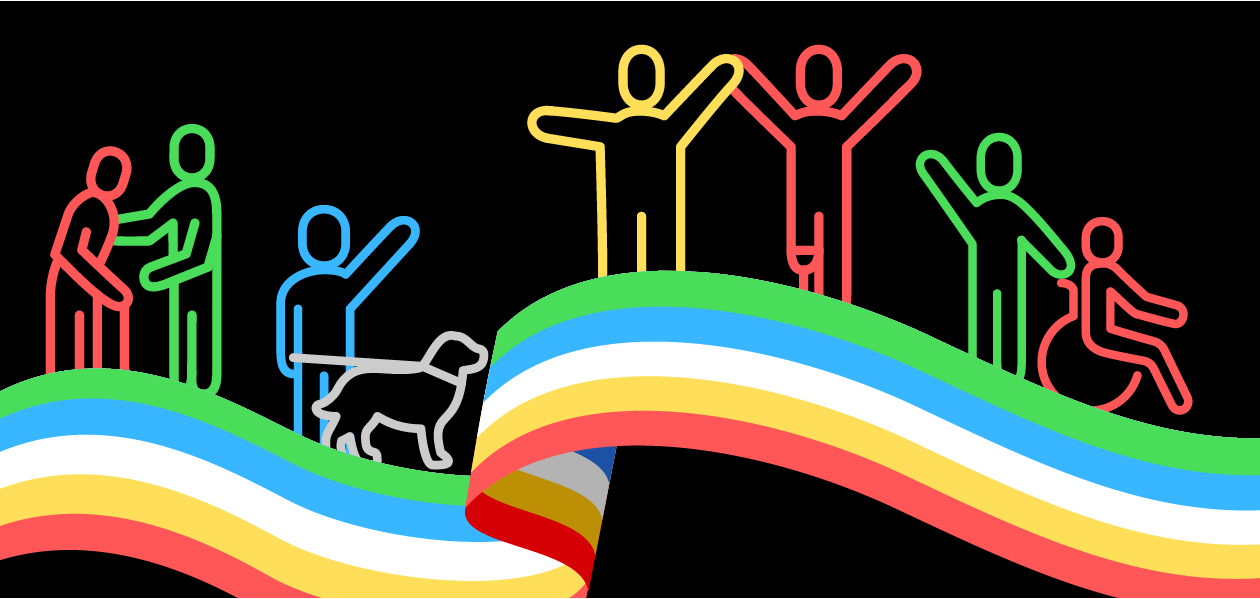
The month of July was chosen to mark the anniversary of the Americans with Disabilities Act (ADA), which was passed on July 26, 1990. The ADA is a civil rights law that protects people with disabilities from discrimination. It aims to ensure they have equal rights in all areas of life, including jobs, schools, transportation, and all public places.
New York City marked the 25th anniversary of the passage of the ADA with the City’s first official Disability Pride Month celebration in 2015. Today, we continue to celebrate alongside the nearly one million people with disabilities who call New York City home—including over 20% of NYC public school students—throughout the month of July.
Throughout Disability Pride Month and all year long, we encourage our students, families, and teachers to explore the resources below to learn more about the history, legacy, and ongoing work of people with disabilities who helped make our world a more accessible place.
Student Supports
NYCPS is dedicated to creating inclusive, welcoming learning environments for every student so that they feel safe and experience success. As part of this commitment, we created a citywide network of Disability Affinity, Disability Pride, and Inclusion Clubs under the banner of InclusiveSchoolsNYC to celebrate the identities of our students with disabilities and to support a culture of belonging and community. These clubs are open to all students in all grades.
For more information about special education and accessibility in New York City Public Schools, please visit our Accessibility webpage, our Special Education webpage, and our Inclusive Schools webpage.
Events, Exhibitions, and Places to Visit
Learning doesn’t just happen in the classroom! Check out what’s happening across the City this July, and all year long:
Reading List
Throughout July, and all year long, we encourage families to explore books that highlight the history, culture, and experiences of people with disabilities. The titles below include stories by and about people with disabilities, offering unique perspectives that are often overlooked in other popular works across a variety of fiction and non-fiction genres. We hope you enjoy reading and learning from them!
Early Readers (Pre-K–2)
- All the Way to the Top, by Annete Bay Pimentel; illustrated by Jennifer Keelan-Chaffins
- The Girl Who Thought in Pictures: The Story of Dr. Temple Grandin, by Julia Finley Mosca; illustrated by Daniel Rieley
- I Talk Like a River, by Jordan Scott; illustrated by Sydney Smith
- I Will Dance, by Nancy Bo Flood; illustrated by Julianna Swaney
- Just Ask! Be Different, Be Brave, Be You, by Sonia Sotomayor; illustrated by Rafael López
- Listen: How Evelyn Glennie, a Deaf Girl, Changed Percussion, by Shannon Stocker; illustrated by Devon Holzwarth
- Six Dots: A Story of Young Louis Braille, by Jen Bryant; illustrated by Boris Kulikov
- Unbound: The Life and Art of Judith Scott, by Joyce Scott, with Brie Spangler, and Melissa Sweet; illustrated by Melissa Sweet
- A Walk in the Words, by Hudson Talbott
- We Want to Go to School! The Fight for Disability Rights, by Maryann Cocca-Leffler and Janine Leffler
Elementary (Grades 3–5)
- Anybody Here Seen Frenchie?, by Leslie Connor
- A Boy Called Bat, by Elana K. Arnold; illustrated by Charles Santoso
- The Chance to Fly, by Ali Stroker and Stacy Davidowitz
- El Deafo, by Cece Bell
- Get A Grip, Vivy Cohen, by Sarah Kapit
- I Am Not a Label: 34 Disabled Artists, Thinkers, Athletes, and Activists from Past and Present, by Cerrie Burnell; illustrated by Lauren Mark Baldo
- A Kind of Spark, by Elle McNicoll
- Out of My Mind, by Sharon M. Draper
- Welcome Back, Maple Mehta-Cohen, by Kate McGovern
- What Stars Are Made Of, by Sarah Allen
Middle School (Grades 6–8)
- Fish in a Tree, by Lynda Mullaly Hunt
- Forget Me Not, by Ellie Terry
- Hummingbird, by Natalie Lloyd
- Insignificant Events in the Life of a Cactus, by Dusti Bowling
- It’s All or Nothing, Vale, by Andrea Beatriz Arango
- May B., by Caroline Starr Rose
- Roll With It, by Jamie Sumner
- Show Me a Sign, by Ann Clare LeZotte
- Song for a Whale, by Lynne Kelly
- Tornado Brain, by Cat Patrick
Upper Grades (Grades 9–12)
- Accidents of Nature, by Harriet McBryde Johnson
- The Degenerates, by J. Albert Mann
- Disability Visibility (Adapted for Young Adults), edited by Alice Wong
- How We Roll, by Natasha Friend
- Give Me a Sign, by Anna Sortino
- Not If I See You First, by Eric Lindstrom
- The Silence Between Us, by Alison Gervais
- The Theft of Sunlight, by Intisar Khanani
- Unbroken: 13 Stories Starring Disabled Teens, edited by Marieke Nijkamp
- The Words in My Hands, by Asphyxia
Many of these books are readily available through the Citywide Digital Library on Sora, which provides free access to hundreds of digital e-books and audiobooks for our students.
Even more great titles to read this month can be found in the Disability Pride Month Collection, where students of all ages can discover books about inspiring characters, real-life leaders, and featuring diverse perspectives that foster understanding, respect, and pride!
You can also check out the It’s a Neurodiverse World Collection, featuring books about individuals with neurodivergent identities, and the Hidden Voices: Americans with Disabilities Collection, which offers a diverse array of titles that capture the voice, stories, and experiences of Americans with disabilities.
For even more recommendations, you can also check out the New York Public Library’s Disability Pride Month reading list and Queens Public Library’s Disability Pride Book Lists, which are available for both kids and teens.
Video and Audio Resources
- Learn more about the Disability Rights Movement and the history of the Americans with Disabilities Act with documentaries and videos from PBS.
- Check out the Disability Rights and Independent Living Movement Project from the University of California Berkley, which compiles oral histories of leaders in the Disability Rights movement in Boston, New York, Washington DC, Texas, Chicago, and Los Angeles.
- Listen to the Enabled Disabled podcast, which aims to shift the narrative around disability and empower people through practical advice and stories.
- The Disability Visibility podcast was hosted by the late disability rights activist Alice Wong and features conversations on disability politics, culture, and media.
- Watch global disability rights expert and self-advocate Cara Yar Khan’s daring expedition through the Grand Canyon in her short film, Facing the Falls, available for free on YouTube and for educators in the ReelAbilities library, and use the free school resource guide to meaningfully engage students in middle and high school classrooms in interactive lessons that teach empathy, courage, and the importance of inclusion and advocacy.
Educator Resources
- All K–12 NYCPS educators and students have free, unlimited access to ReelAbilities’ films, discussion guides, and lesson plans! These resources empower classrooms to explore disability representation, culture, and advocacy through cinema. Currently, forty short films aligned with grade-appropriate standards are available, with plans to expand to 500+. This partnership is administered by NYCPS’s Special Education Office and reflects our commitment to inclusive communities through the power of storytelling.
- Check out the National Endowment for the Humanities’ Disability Pride Month Virtual Bookshelf, which spotlights NEH-supported projects on disability.
- The Zinn Education Project has a variety of resources and recommendations related to disability history.
- Learning for Justice has resources available for teachers during Disability Pride Month and beyond.
- The Helen Keller Archive, a fully accessible digital collection from the American Foundation for the Blind, has lesson plans that teach middle and high school students about using digital archives and the differences between primary and secondary sources. They also use the resources from the archive to teach about the life and work of Helen Keller.
- Explore disability in modern and contemporary poetry with a curated collection from the Poetry Foundation.
- Use the “Our Ride Ahead” summer screening kits during summer programming for students age 10 and up to learn about disability justice and ableism. The kit is free for any non-profit summer camp or programs across the US and contains multiple versions of the Emmy Award-winning films, The Ride Ahead and My Disability Roadmap, and a discussion guide.
Hidden Voices
Hidden Voices began as a collaboration with the Museum of the City of New York, initiated to help City students learn about the countless individuals who are often "hidden" from traditional historical records. Each of the people highlighted in the series has made a positive impact on their communities while serving as outstanding examples of leadership, advocacy, and community service.
Hidden Voices curriculum resources are now available through WeTeach NYC, including:
In addition to these lessons, we regularly feature profiles on history-making individuals who could be considered “hidden voices.” During Disability Pride Month, check out our profile on:
- Judith Heumann, a daughter of Holocaust survivors whose advocacy work earned her the nickname “the Mother of the Disability Rights Movement” for her vital role in the fight for equal access for people with disabilities.