We provide high-quality early care and education to children from birth through age five and beyond. Through infant and toddler care, 2-K, 3-K, and Pre-K, we provide children and families with a strong start in school and life.
Information for early childhood staff, including our partners and providers, can be found on the InfoHub.
What to Expect
Young children learn through play, exploration, and positive relationships. Our programs help children develop language, build new skills, and deepen their understanding of the world.
What you can expect your child to do in our early childhood programs
Begin to discover what makes them unique and learn to play with others.
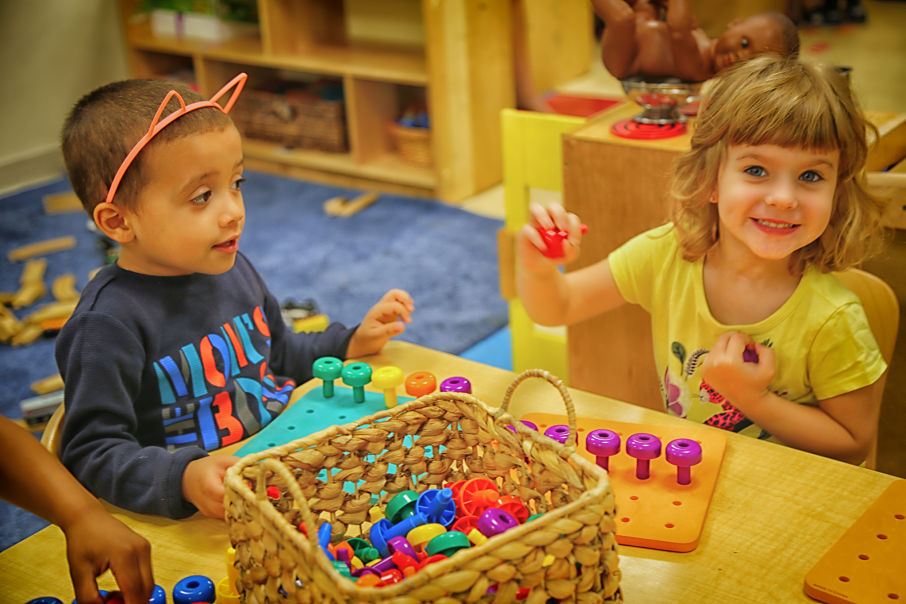
Show curiosity, ask questions, and share creative ideas.
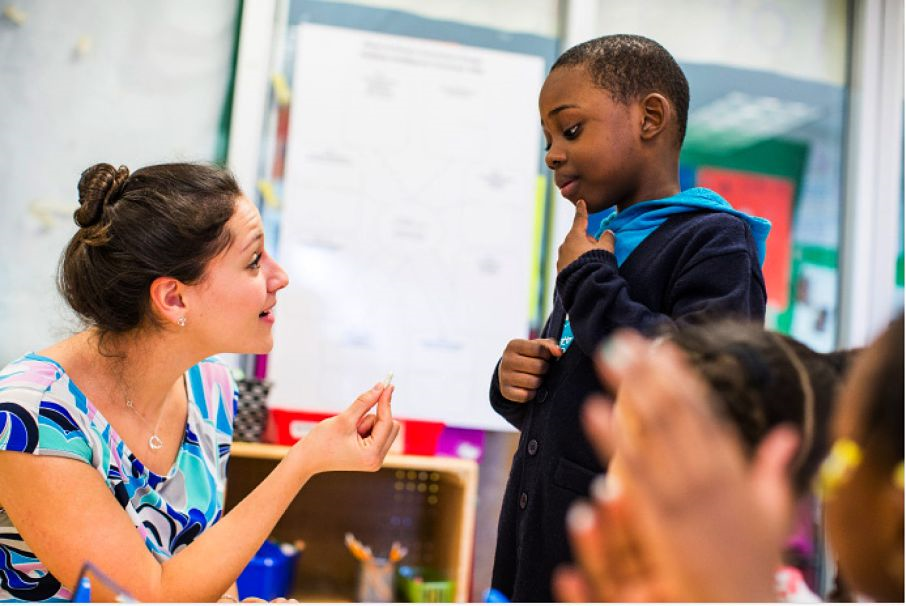
Learn and practice new concepts.
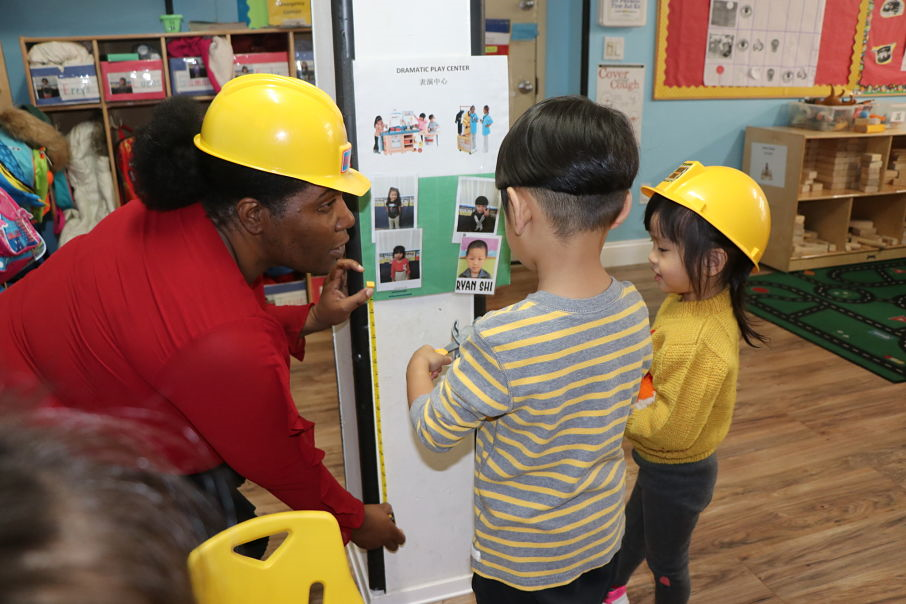
Grow as a learner and become an active member of their learning community.
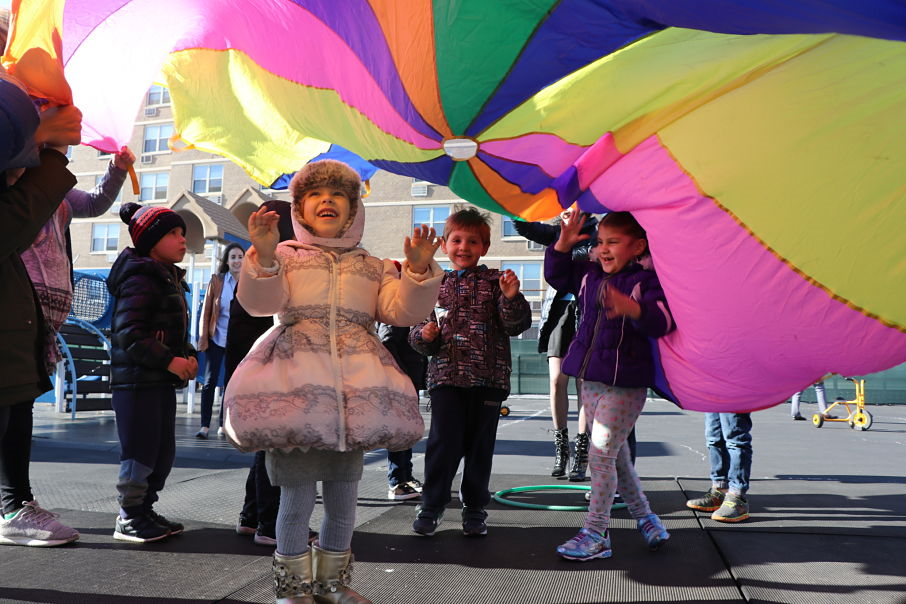
Safely explore new ideas and materials while building the foundation for language, math, and scientific thinking.
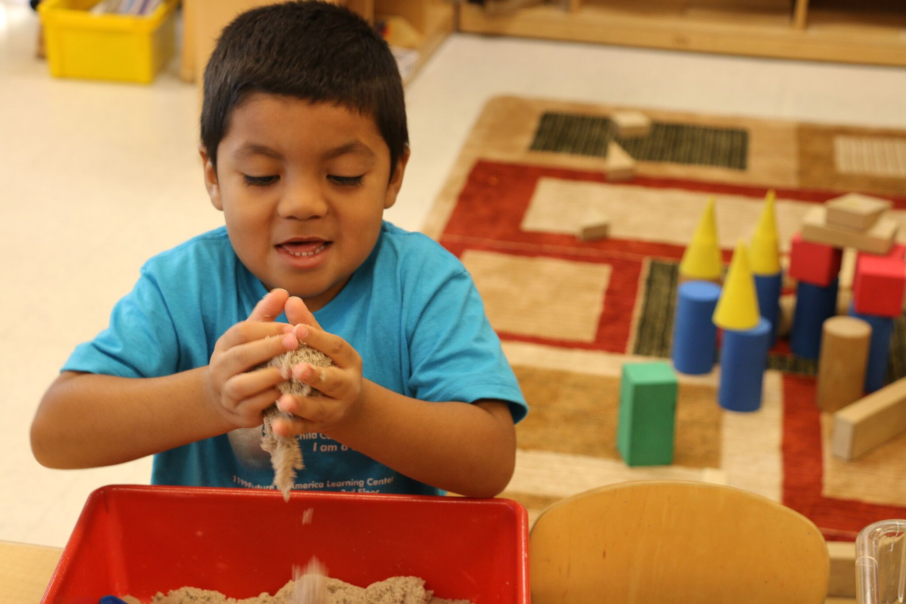
Throughout a typical day in one of our early childhood programs, your toddler or preschooler will learn in many different ways, including:
- Short whole group and small group activities
- Choice time where children can explore a variety of materials
- Outdoor playtime
- Rest/naptime
- Meal and snack time
These experiences lay the foundation for your child's success in school and life by supporting five key areas of development:
- Early social and emotional skills, such as sharing, solving social problems, and expressing and managing their feelings
- Learning skills such as problem-solving, imaginative thinking, and persistence
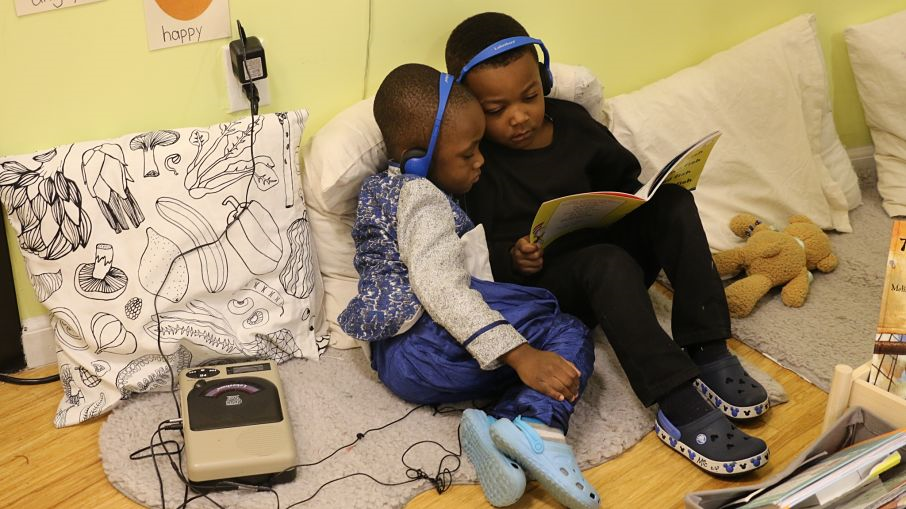
- Pre-reading and writing skills, such as understanding that letters have meaning and can be combined to form words, and that reading and writing can be used to share information and ideas
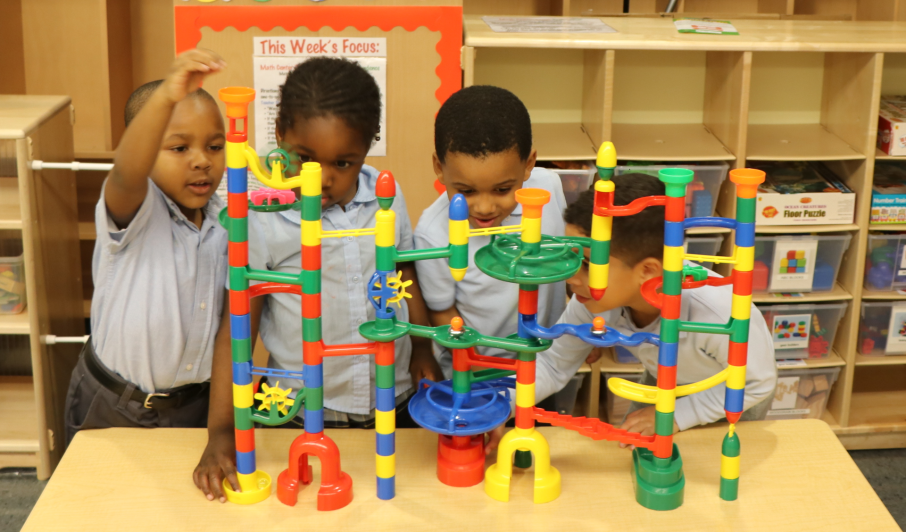
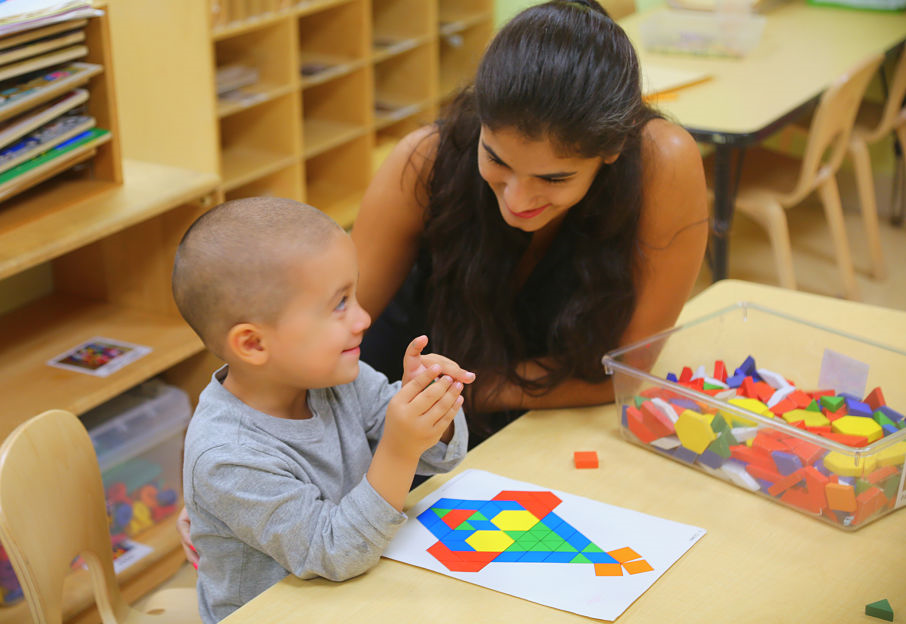
- Early math skills, such as learning about numbers, shapes, patterns, and sorting
- Physical strength and coordination skills, such as running and using paintbrushes and crayons
Find a Program
Our early childhood programs are offered in a variety of settings:
- District Schools: programs located within public elementary schools and overseen by the school's principal.
- Pre-K Centers: operated by NYC Public Schools staff, these programs offer 3-K and pre-K. They are located either in existing district school buildings or standalone NYCPS sites.
- New York City Early Education Centers (NYCEECs): community-based organizations that partner with NYCPS to provide infant and toddler care, 2-K, 3-K, and pre-K. These programs are selected through a rigorous evaluation process and are supported by the NYCPS Division of Early Childhood Education.
- Family Child Care: home-based programs that are supported by Family Child Care Networks, which partner with NYCPS. These programs offer infant and toddler care, 2-K, and 3-K.
Use these online tools to find a program that is right for your family:
Need help? Visit a Family Welcome Center or call 311 for information about early care and education.
Mealtime Expectations
Mealtime should be a welcoming, enriching experience shared with children and program staff. Children need nourishing food to support healthy growth and development. Families can expect programs to provide nutritious meals and snacks in a safe, supportive environment that encourages healthy eating habits and social interaction. New York City Public Schools Division of Early Childhood Education (NYCPS DECE) requires all birth-to-five programs to provide nutritious meals and snacks to children in accordance with New York City and the Child and Adult Care Food Program (CACFP) standards. Serving portions should be appropriate to the nutritional needs and age of the child, and staff must always provide adequate and competent supervision during meals to prevent choking hazards and support young children in developing self-feeding skills.
Providers should share a Meal Policy with families that outlines:
- The number of meals and snacks served during program hours
- The types of food served
- Protocols if families choose to supply their own food
- Proper storage for all foods and beverages
- Precautions taken regarding food allergies
- How menus for meals served during program hours will be shared
- How staff will use mealtime to help children build social and self-help skills
Health Supports by Setting Type
All early childhood education programs contracted with NYCPS are required to accommodate children's medical needs so they can fully participate in their programs.
The following summarizes key health supports for children and health-related requirements for providers across different early childhood settings:
- Family child care providers (home-based programs) are required to complete first aid and CPR training and will be trained to administer an epinephrine auto-injector or other device (e.g., EpiPen), as needed. Additionally, providers receive Medication Administration Training (MAT) when a child enrolled in the program requires medication during the program day.
- NYCEECs (community-based organizations that partner with NYCPS) are required to have staff on site trained in basic first aid, CPR, and epinephrine administration. Additionally, programs are required to have MAT-certified staff on site to administer medication to children who need it during the program day.
- NYCPS district schools and NYCPS pre-K centers have full-time nurses on site. These settings are also supported by school-based 504 Coordinators.
- If your child is enrolled in a home-based program or community-based organization and has medical needs during the program day, first contact your child's provider, as all providers are required to provide health accommodations. If a child requires specialized medical support beyond what the program can provide, the family may be asked to complete additional medical documentation, including consent for NYCPS to communicate with the child's healthcare provider, so that appropriate accommodations can be identified and arranged. If you need additional support, please contact the Family-Centered Partnerships (FCP) team at decefamilypartnerships@schools.nyc.gov or call 311 and ask for early childhood education. The City uses 311 to track and respond to requests for assistance, and inquiries will be directed to the appropriate contact within the NYCPS Division of Early Childhood Education (DECE).
How to Enroll
Learn more about enrolling your child in:
Special Education in Early Education
NYCPS is committed to providing every child with the opportunity to learn and explore in a safe, nurturing, and engaging environment.
To learn more about Special Education services available in our early childhood programs, visit Moving to Preschool. If your child is in the Department of Health and Mental Hygiene Early Intervention program, go to the Transitioning from Early Intervention section to learn about how to prepare for the transition from Early Intervention to preschool, including what preschool options and special education services may be available to you.
Learning Together
So much of a child's brain growth occurs by age five. When you talk, read, and play with your child every day you are helping to build a solid foundation for success in school and life. Here are the things you can do at home to help your child learn and grow:
Talk with your child.
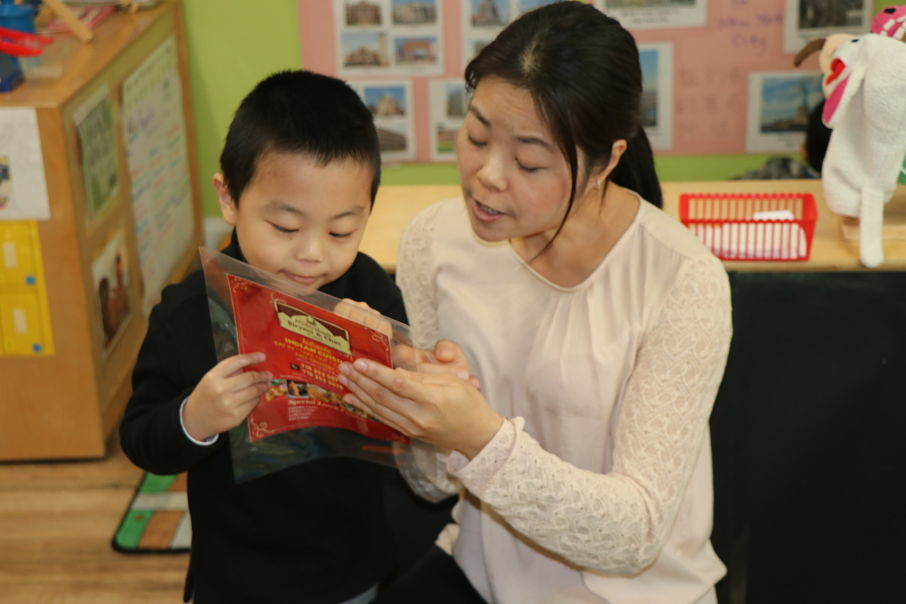
Every word your child hears builds their vocabulary and helps them to share their ideas through talking. This builds the foundation for later writing skills.
- Talk about the things you notice around you such as:
- Noises you hear while walking around the city together.
- Colors, shapes, and textures of the things you see around you such as the details in buildings, objects, and nature.
- Symbols, letters, and words on signs or objects.
- Have back-and-forth conversations with your child. Try asking, "How..." or "Why..." questions to keep the conversation going. For example, you might say, "Why do you think that happened?" or "How do you know that blue and red make purple?"
- Help your child talk about feelings. For example, you might say, "You look frustrated, how do you feel?"
Read with your child.
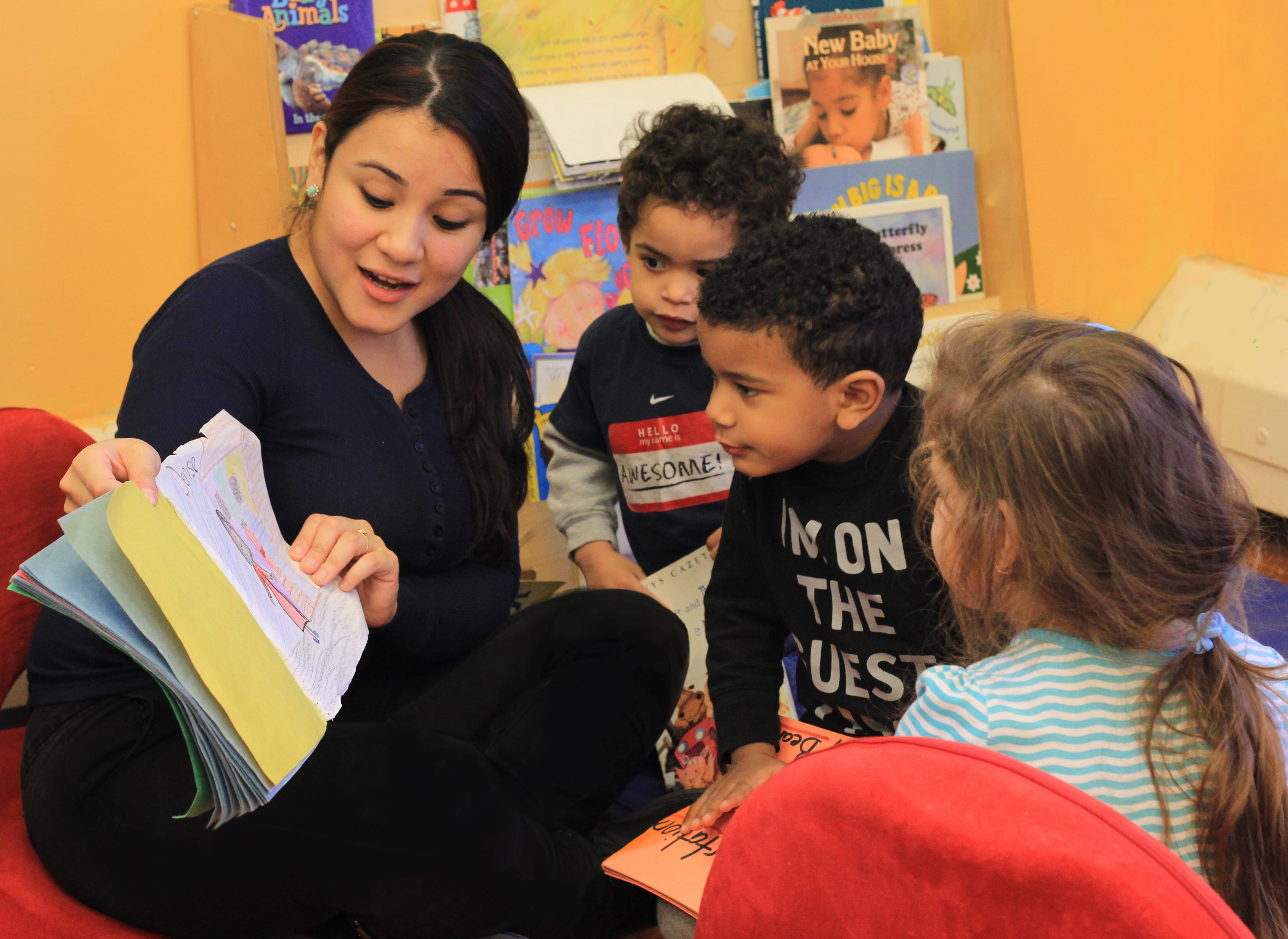
Reading together every day strengthens your relationship and helps prepare your child to read and write.
- Choose fun, engaging stories that are right for your family at your local library. Library staff can help you choose exciting books in a range of languages and topics. Many libraries have children's sections and special events for families. Click on your borough to find your local library:
- After selecting a book, invite your child to read with you:
- Before turning the page, ask your child to predict what will happen next.
- Make the story come alive by acting out movements or noises as they happen in the story.
- Make up stories with your child. Draw pictures of events in the story or act them out. Any time your child makes a mark on a page—scribbles, pictures, or letters—they are writing!
- Look at the faces of people and characters in books or magazines and ask your child, "How is _____ feeling?" Describing how others feel helps children express their own emotions and builds vocabulary skills.
Play with your child.
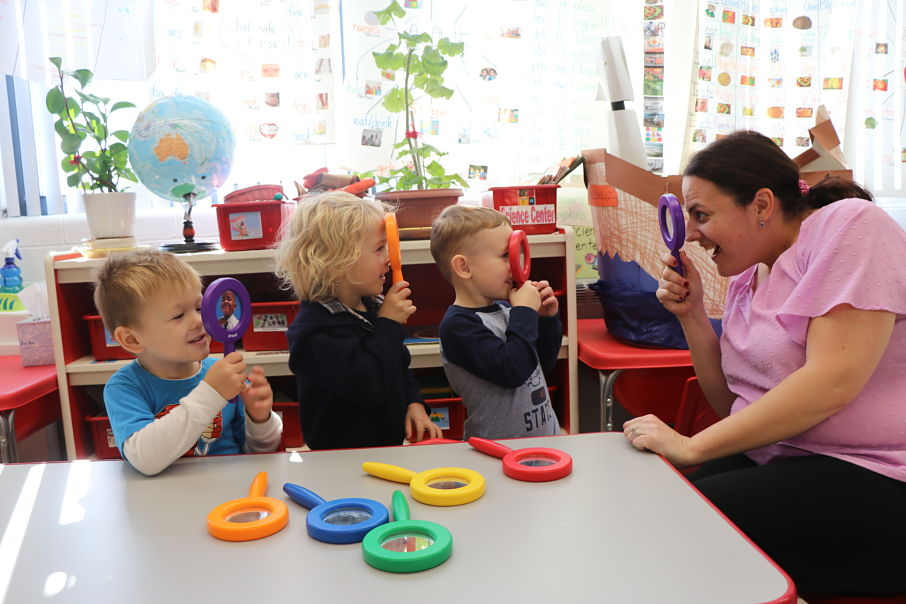
Play is the work of young children. When children play, they explore their ideas and interests, gain knowledge about the world and build self-esteem. Make time for play, and when possible, play together!
- Listen to your child play. Listening to your child play can tell you what your child finds important and what they are learning.
- Play pretend! Children play pretend to make sense of recent experiences. Your child may do this on their own, but you can also join in the fun. Research has shown that dramatic play helps children develop empathy, understand math and reading, and find creative solutions to problems. Your child may choose to act out anything from family dinner to a trip to the zoo to a made-up fairy tale.
- When you play together, follow your child's lead. Allow your child to explore various materials and use their imaginations to get the play started. Let your child be the star of the show and give yourself a supporting role. As you play together, do what your child does and talk about what they are doing. For example, "All our cars were lined up racing, now they are stacked on top of each other in a tower."
- Go outside! In our busy city it can be a challenge to find the space or time to go outdoors and play. However, research shows that outdoor play is important to brain development. In addition to building muscle strength, coordination, and balance, playing outdoors encourages children to make predictions, take small risks, and cooperate with others. Not sure where to play? Visit NYC Parks or ask your child's teacher about outdoor spaces in the neighborhood.
Keep in touch with your child's school.
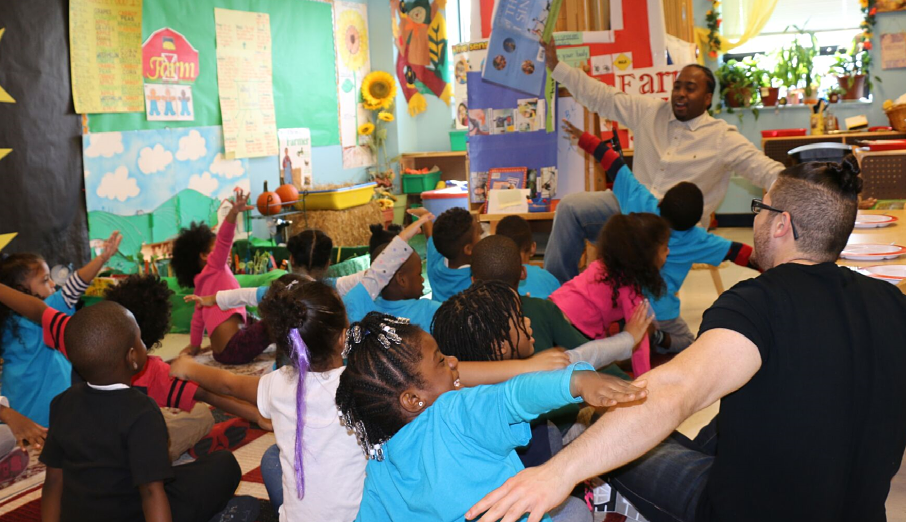
You are the expert on your child and their best supporter. You can help your child succeed in school by keeping in touch with your child's teacher.
- Introduce yourself to your child's teachers. Ask about what your child is doing during the program day.
- Share information about your child and family with your child's teachers. This helps your child's teacher know how best to meet the needs of your child. General information as well as details about changes in your child's life are helpful.
- Have a conversation with your child's teacher about how you might support the school. There are many ways to offer support:
- Share some favorite songs you sing with your child, or other traditions that are important to your family.
- Donate recycled (clean) containers or natural materials (twigs, pinecones, leaves, etc) for children to use in their learning environment.
- If you have time in your schedule, ask about volunteering during activities or at special events.
Resources
- Early Literacy Resources is a NYCPS webpage that provides fun and easy ways to help your child build a lifelong love of learning.
- Vroom is a website and app that helps turn everyday moments into fun brain-building experiences. Vroom can help turn mealtime, bath time, and commuting into learning opportunities.
- Family Resources and Tools from the Center on the Social and Emotional Foundations for Early Learning has information on why it is important for young children to learn about social and emotional skills. This site provides many ideas and strategies for you to use as you support young children through managing emotions, creating caring relationships, and addressing challenging behavior.
- Choose My Plate provides clear guidance on healthy eating at any age! With a page just for preschoolers, you can learn more about how what your child eats supports their body and mind. This site has articles and easy-to-use tools to help your child eat well, be active, and grow up healthy.
- PBS Parents gives you tips and resources for bringing learning to life at home. With ideas for crafts, science experiments, recipes, and more, your family will love the adventures inspired by this site!
- Dolly Parton's Imagination Library provides a free book each month to children from birth to age 5 (may not be available in all areas).
Infant Care
We offer programs for infants based on income eligibility. In a typical infant program, your child will be cared for by responsive caregivers who will partner with you and support your child's learning and development. Infant classrooms are safe, nurturing, and predictable environments where caregivers focus on each infant's individual needs while supporting the entire family.
The experiences your infant has in care help build key developmental skills, including:
- Social and emotional skills such as engaging with familiar adults, beginning to interact with other infants, and expressing emotions, such smiling or laughing when pleased and crying to show displeasure.
- Physical skills such as developing strength to move their bodies and explore how their bodies work.
- Language and communication skills such as babbling, responding to their name, laughing, and smiling.
- Cognitive (thinking) skills such as expressing curiosity, focusing on objects and faces, enjoying peekaboo, and recognizing familiar faces.